No products added!

Written by
Ruby
April 30, 2026
If you’ve been thinking about going natural with your skincare but don’t know where to begin, you’re not alone. The switch feels overwhelming — long ingredient lists, conflicting advice, and no clear starting point. This guide cuts through the noise and gives you a path that’s practical, affordable, and gentle enough for any skin type.
Why people switch
Your skin is trying to tell you something
Most people don’t wake up one day and decide to go natural for philosophical reasons. They switch because something stopped working. Their skin started breaking out after years of being clear. A face wash that used to feel refreshing started leaving a tight, burning sensation. A moisturiser they’d used for years suddenly caused a rash.
Sound familiar? These reactions often point to a growing sensitivity to synthetic ingredients — particularly sulphates, parabens, artificial fragrances, and preservatives that accumulate in mainstream skincare. Here are the most common reasons people make the switch:
Skin irritation
Redness, tightness, breakouts, or sensitivity appearing after washing or moisturising
Environmental values
Choosing products that don't release microplastics or synthetic chemicals into waterways
Going back to roots
Returning to Ayurvedic ingredients like neem, turmeric, and aloe that Indian households trusted for generations
Setting the record straight
What "chemical-free" actually means
Technically, everything is a chemical — water is a chemical, oxygen is a chemical, and so is the curcumin in turmeric. When people say “chemical-free skincare,” they mean free from synthetic chemicals: artificial fragrances, sulphates (SLS/SLES), parabens, silicones, phthalates, and petroleum derivatives that are common in mass-market products.
- Worth knowing
Natural doesn’t automatically mean weaker. Many synthetic skincare ingredients were developed to mimic natural ones because the natural version was too expensive to source at scale. Neem’s antibacterial action, curcumin’s ability to inhibit melanin, and aloe’s polysaccharide moisture-binding are all well-documented in clinical literature. The difference is that natural formulations deliver these benefits without the synthetic carrier chemicals that cause most of the irritation.
The goal isn’t purity for its own sake — it’s reducing daily exposure to ingredients your skin doesn’t need and may be reacting to, while giving it actives it can recognise and use.
Where to start
Soap is the easiest first swap — here's why
Most people make the mistake of trying to overhaul their entire routine at once. They replace their face wash, toner, serum, and moisturiser simultaneously — and when their skin reacts, they have no idea what caused it. A smarter approach is to swap one product at a time, starting with the one that has the most contact with your skin: your soap.
Soap is also the highest-risk product in most people’s routines. Commercial bar soaps and body washes are loaded with SLS (sodium lauryl sulphate), an aggressive surfactant that strips the skin’s natural oils along with dirt. The “squeaky clean” feeling after washing is actually a warning sign — it means your skin’s acid mantle has been disrupted, which triggers excess oil production and inflammation. Here’s the full swap list:
| What you’re using now | Natural alternative | Priority | |
|---|---|---|---|
| SLS-based bar soap | → | Cold-pressed herbal soap | Start here |
| Synthetic face wash | → | Neem or turmeric soap bar | Start here |
| Paraben moisturiser | → | Aloe vera gel or raw coconut oil | Week 2–3 |
| Synthetic toner | → | Rose water or apple cider vinegar dilution | Month 2 |
| Chemical SPF | → | Mineral SPF (zinc oxide base) | Month 2 |
Managing the transition
The adjustment period: what's normal, what's not
Your skin has adapted to the artificial signals from synthetic skincare particularly from SLS stripping its oils and your skin overproducing sebum in response. When you remove that cycle, it takes time to recalibrate. This is called the “purging” or adjustment period, and it’s misunderstood by almost everyone who goes through it.
1–2 weeks
Possible initial breakout or oiliness
Your sebaceous glands are still in overdrive from years of compensating for SLS stripping. You may notice slightly more oil or minor breakouts. This is your skin resetting, not a reaction to the new product.
3–4 weeks
Sebum production begins to normalise
Oil levels start to balance out. Skin feels less reactive after washing. The tight or burning sensation you used to notice after your old face wash disappears.
5–8 weeks
Skin finds its new baseline
Most people notice visibly calmer, more even skin by week six. The herbal actives — neem’s antibacterial compounds, turmeric’s curcumin — have had enough time to produce a measurable difference.
Important distinction
- Important distinction
An adjustment reaction is minor, temporary (under two weeks), and improves on its own. A true allergic reaction appears immediately, is concentrated around the area of application, and involves itching, hives, or significant swelling. If you experience the latter, stop using the product and consult a dermatologist.
Your starter routin
A simple 3-product morning & evening routine
Keep it minimal for the first month. Three products, twice a day. Once your skin has adjusted, you can layer in more — but most people find they need far less than they thought once they’re using the right ingredients.
Morning & evening · Cleanse
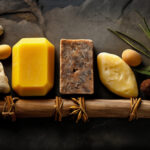
Ramlu’s Neem Soap — for oily, acne-prone, or combination skin
Lather with lukewarm water (never hot — it strips oils). Use on face and body. Rinse fully and pat dry. The neem extract does its antibacterial work during the 30–60 seconds the lather sits on your skin. Do not scrub — let the soap do the work.
2.Morning & evening · Treat
Ramlu’s Turmeric Soap — for dull skin, dark spots, or uneven tone
If your primary concern is skin tone rather than acne, use the turmeric bar as your cleanser instead of (or alternating with) neem. Apply to a damp face, leave the lather for 45 seconds, then rinse. The curcumin works gradually — you’ll see the most noticeable improvement in weeks 4–6.
3.After washing · Hydrate
Ramlu’s Aloe Vera Soap — for dry, sensitive, or post-sun skin
Apply to skin that’s still slightly damp from washing — this is when aloe’s humectant properties work best, locking in the water already on your skin’s surface. For very dry skin, follow with a few drops of raw cold-pressed coconut or jojoba oil while still damp.
Tips for success
Four things that make the difference
Swap one product at a time
Replace your soap first. Wait three weeks before changing anything else. If something goes wrong, you'll know exactly why.
Give it six weeks
Most people give up in week two during the adjustment period. Results from herbal actives are cumulative — the visible improvement happens at week 4–6, not day 3.
Keep your water lukewarm
Hot water removes the skin's natural lipid barrier just as effectively as SLS does. Lukewarm water is one of the easiest free upgrades to your skin health.
You don't need to overhaul everything at once
Keep it minimal for the first month. Three products, twice a day. Once your skin has adjusted, you can layer in more — but most people find they need far less than they thought once they’re using the right ingredients.
The best natural skincare routine is the one you’ll actually stick with. Start with a single soap swap. Use it consistently for six weeks. Pay attention to how your skin feels — not just how it looks. The shift from synthetic to natural is less about finding a miracle product and more about removing the daily stressors that were quietly irritating your skin all along.
Ramlu’s makes it easy to start: three focused bars, each formulated for a specific concern, all sulphate-free and made with cold-pressed herbal extracts. Pick the one that matches your skin’s biggest issue right now, and the rest will follow.